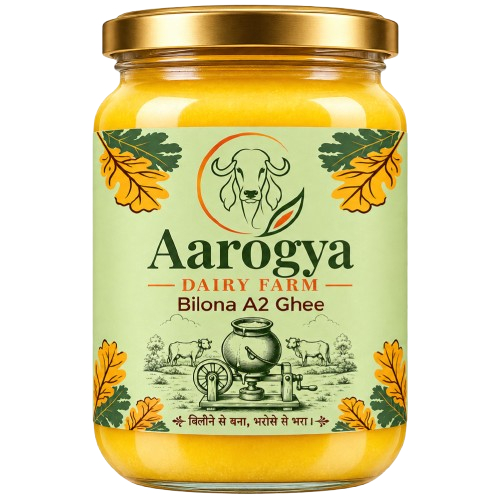
Walking down the dairy aisle today can leave your head spinning. You will see jars plastered with labels like A2, Bilona, Gir Cow, or Cultured Ghee, sometimes all slapped onto the same label. It gets confusing fast, but each word just tells you a piece of the puzzle: where the milk came from, which cow produced it, or how the farm turned it into ghee.
At its simplest, A2 Bilona Ghee is traditional clarified butter made with two strict rules: it starts with milk from native Indian cows that carry the A2 protein, and it uses an old-fashioned curd-churning method rather than quick factory machines. The end result is a deep golden fat with a rich, nutty smell and that classic grainy texture many of us remember from childhood.
Making ghee the Bilona way takes time, there are no fast shortcuts here. Instead of pulling raw cream straight out of fresh milk with heavy factory spinners, the process follows a traditional cycle:
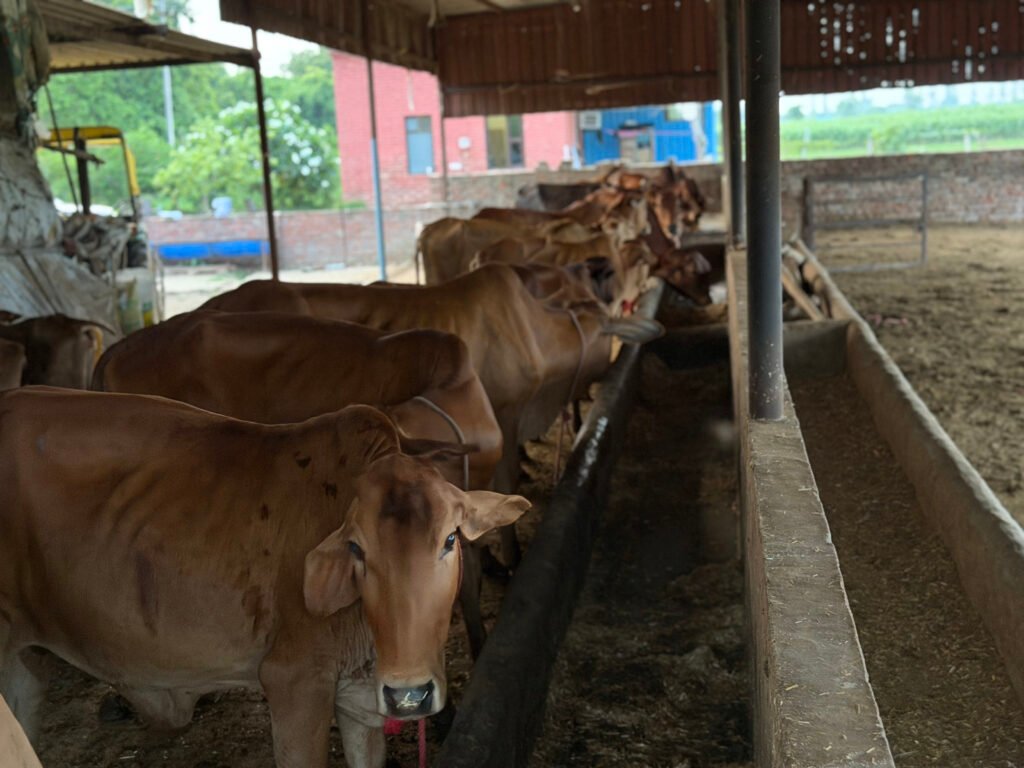
Farms like Aarogya Dairy Farm still stick to this exact craft using Gir cow milk. Since it takes roughly 25 to 30 liters of pure milk just to make a single liter of curd-churned ghee, traditionally made jars naturally carry a higher price tag than mass-produced factory brands.
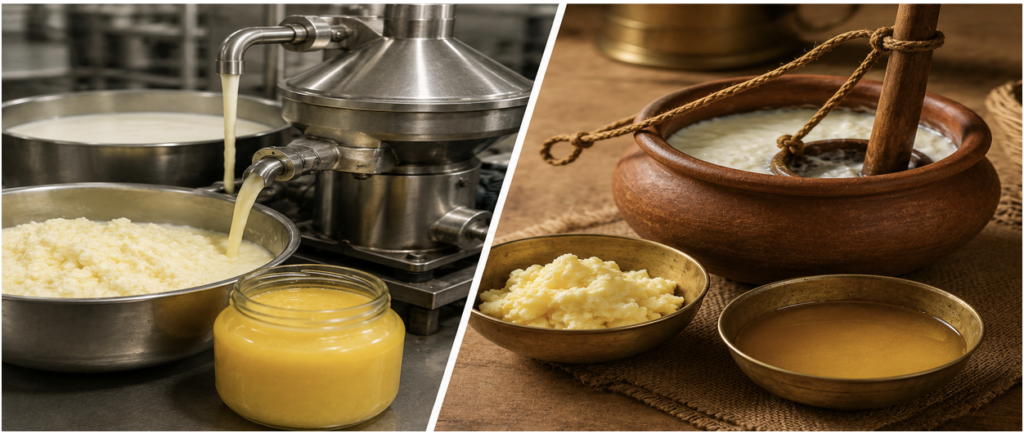
If you are wondering Why is A2 Bilona Ghee different from standard supermarket tubs, it really boils down to two things: the starting milk and the extra steps taken in the kitchen.
Most commercial brands use raw milk from mixed or foreign cow breeds, run it through high-speed mechanical separators to yank out raw cream, and melt that cream straight into oil. Traditional A2 Bilona Ghee, on the other hand, ferments whole milk into curd first.
It works a lot like artisan sourdough versus cheap white bread. The fermentation stage breaks down lactose, creates healthy short-chain fatty acids, and leaves you with a much richer taste.
| Feature | Factory Machine Ghee | Traditional A2 Bilona Ghee |
| Protein Type | A1 or mixed beta-casein | A2 beta-casein (from native cows) |
| Main Ingredient | Raw industrial cream | Whole cultured curd |
| Churning Method | High-speed electric centrifuges | Wooden Bilona churner |
| Texture & Taste | Smooth, greasy, or flat | Granular (danedar) with a toasted aroma |
When looking at real A2 Bilona Ghee Benefits, it helps to skip the over-the-top internet claims and look at actual nutrition science:
The label A2 Gir Cow Bilona Ghee means the milk comes straight from native, humped Gir cows originally from Gujarat.
If knowing where your food comes from matters to you, this label gives you real traceability. When you are looking for authentic Gir Cow Ghee, keep these quick checks in mind:
Farms like Aarogya Dairy Farm focus on this exact single-origin setup for their Bilona Gir Cow Ghee and Bilona A2 Ghee. Pairing good ghee with other unrefined kitchen basics, like Aarogya Farm Pure Mustard Oil or Aarogya Farm Organic Raw Honey, is an easy way to keep your daily meals wholesome.
You do not need to overthink how you use A2 Cow Ghee at home. A little bit goes a long way:
When you ask Why is A2 Bilona Ghee different as a customer, it comes down to transparency. A good brand will make it obvious whether their product comes from raw cream or cultured curd, tell you which cows produced the milk, and print clear batch details on the jar.
Before ordering online from brands like Aarogya Dairy Farm, always double-check that the jar is properly sealed, made of glass, and stored away from direct heat and moisture.
A2 Bilona Ghee is, after all, a choice between traditional quality and mass-market shortcuts. The cultured curd process, great taste and easy on digestion makes A2 Gir Cow Bilona Ghee truly appealing. Used sparingly, with lots of fresh vegetables, whole grains and lentils it’s one of the most rewarding traditional fats you can have in your kitchen.
It is an old-school process where whole milk is turned into curd, churned with a wooden paddle (Bilona) to get fresh butter, and then slowly simmered into pure ghee.
Nope. The A2 label simply means the milk comes from cows that produce the A2 beta-casein protein. It is gentle on digestion, research shows. Ghee is a healthy cooking fat, not medicine.
Most people with mild lactose issues handle it just fine. Fermenting the milk into curd breaks down almost all lactose, and clarifying the butter strips out the remaining milk solids.
Store in a clean glass jar at room temperature away from direct sunlight and moisture. Always take it out with a perfectly dry spoon, so that no water gets inside.
Look for a short ingredient list (100% milk fat), explicit mention of curd churning (Bilona), clear farm sourcing, a tight seal, and clear manufacturing dates.